
IMANA NEWS
Global Day of Parents: Honoring the Role That Shapes Generations
27 May 2026
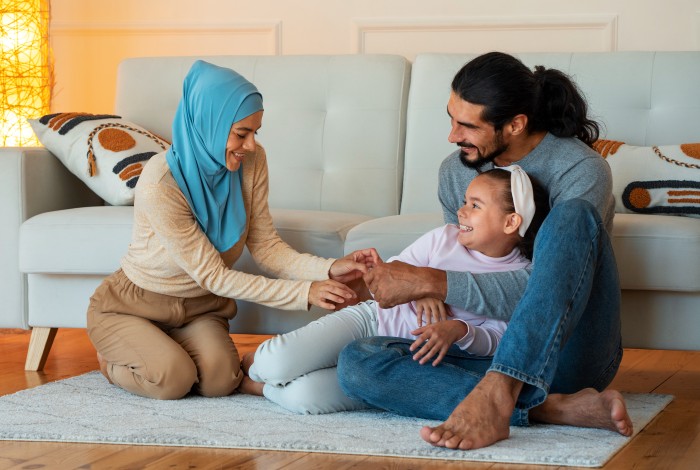
Some things are so normal that people don’t really stop to think about them. Parenting is one of those. It shows up in routines, in habits, and in the way kids grow up without even realizing what’s shaping them.
This is why the Global Day of Parents is celebrated each year on June 1 to honor all guardians around the world for their devotion to children and enduring sacrifices.
Created by the UN General Assembly in 2012, it emphasizes the vital role of parents in raising children and advocates assistance for caregivers. It is commonly marked by:
- The purpose is to recognize parents for their "most crucial role globally," emphasizing the protection, guidance, and support they provide to their children.
- The theme focuses on "positive parenting", acknowledging that parenting is a skill that needs assistance, time, and resources.
- It highlights the importance of emphasizing that parents are the primary sources of nourishment, encouragement, and safety essential for early childhood growth.
- It encourages activities involving practices like family-centered activities, community gatherings, assembling family trees, and expressing gratitude through messages to parents and guardians.
It should not be mistaken for specific national Parents' Days, but serves as a global day of acknowledgment.
What Is the Global Day of Parents?
The United Nations introduced the Global Day of Parents back in 2012. The idea was straightforward: to recognize the role parents play in raising children.
It ties into earlier efforts around children’s rights too, especially things like the Convention on the Rights of the Child. So it’s not just symbolic; it comes from a broader conversation about what children need to grow up well.
What stands out is that it doesn’t try to define parenting too strictly. There’s no single model being promoted. This approach makes sense because parenting doesn’t look the same anywhere.
There are different cultures, families, and realities. The common thread is just that children need stability, care, and some kind of support system around them.
Why Parents Matter More Than Ever
It’s easy to say parents are important, everyone agrees with that. But the depth of that influence isn’t always obvious.
A lot of what kids learn doesn’t come from formal teaching. It comes from watching. From how parents react, how they deal with stress, how they talk to others. Those patterns stick and can influence children.
Research supports this, although it is also evident in everyday life. You can notice it in everyday situations. The way confidence builds (or doesn’t) or the way kids handle setbacks. It usually traces back somewhere.
At the same time, parenting today feels more complicated than it used to. Work takes up a lot of time, and it’s not always flexible. Then there’s technology, which changes things in ways that are still hard to fully understand. Parents are figuring that out in real time, along with everything else.
The Reality of Modern Parenting Challenges
Parenting is meaningful, but it’s also heavy at times. A lot of parents are just trying to keep up. Work, bills, responsibilities, and then being emotionally present for children on top of that. It’s not something that naturally balances out.
People talk about “work-life balance” like it’s a stable thing, but for many families, it’s more like constant adjustment.
Mental health is also an important part of the equation. Not just for kids, but for parents too. There’s this expectation to always be patient, understanding, and available. That’s hard to sustain all the time.
For Muslim families, there can be another layer. Things like faith, identity, and belonging come into play more directly. Especially for children growing up in environments where they might feel different at times. Those are conversations that take time, and they’re not always easy to navigate.
Parenting and Faith: A Foundation for Character
In many Muslim households, parenting and faith are closely connected. Values like respect, responsibility, and compassion aren’t just talked about; they’re practiced through routines, expectations, and small everyday moments.
But it’s not always straightforward. Kids are exposed to different influences everywhere: school, social media, or friends. So parents often find themselves trying to keep some consistency without being too rigid.
That balance can be difficult. Still, having a clear set of values tends to help over time. It gives children something stable to come back to, even when things around them feel uncertain.
The Role of Community and Organizations
Even though parenting happens at home, it doesn’t really exist in isolation. Community matters more than people sometimes admit.
Having support (whether it’s advice, shared experience, or just knowing other people are going through similar things) can make a big difference.
At IMANA, we provide that kind of support. Not in an abstract way, but through practical resources, discussions, and programs that connect to real concerns.
It could be something as simple as guidance on health or mental well-being, or spaces where parents can talk openly. Sometimes that alone helps. If you wish to learn more about parenting and its association with Islam and healthcare, our webinar by Dr. Mariha Saeed explores the integration of both worlds into family.
Recognizing Parenting in All Its Forms
Not every family fits the same structure, and that’s just reality. Some parents are raising children on their own, while others rely on big families. In other cases, people step into parental roles without planning for it.
Each situation comes with its own difficulties, and its own strengths too. Recognizing that variety matters, because it shifts the focus away from ideal scenarios and toward real ones. That’s usually where more meaningful support starts.
Practical Ways to Mark the Day
There isn’t a single “right” way to observe the Global Day of Parents. It doesn’t need to be complicated. Sometimes it’s just about slowing down a bit or spending time together without distractions.
It can also be a moment to think about what’s working and what isn’t. Not in a critical way, just honestly. Community events, if they happen, tend to focus on everyday topics: stress, communication, routines. Things people are already dealing with.
For those involved in volunteering, it can be a chance to support families who might need extra help. Even small efforts can matter.
Supporting Parents Beyond One Day
One day of recognition is meaningful, but it doesn’t change much on its own. The bigger question is what happens after.
Support needs to be consistent. Access to childcare, healthcare or flexible work. These things make a real difference in daily life.
There’s also the cultural side of it. Not every family has the same background, and support systems need to reflect that. Otherwise, they don’t really work. At IMANA we tend to focus on long-term efforts, which is probably where the real impact comes from. Not just awareness, but continuity.
A Moment to Reflect and Appreciate
At the end of the day, this is really about noticing something that’s easy to overlook. Parenting doesn’t always stand out. It’s not always visible. But it shapes almost everything that comes after.
It’s not perfect all the time. It can be exhausting, inconsistent, and sometimes overwhelming. That’s part of it.
For Muslim families in North America (and any community), the Global Day of Parents is just a small pause. A moment to recognize the effort behind something that usually runs in the background. Our resources at IMANA have all the help you might need.