
IMANA NEWS
International Nurses Day: Honoring Compassion and Service
27 May 2026
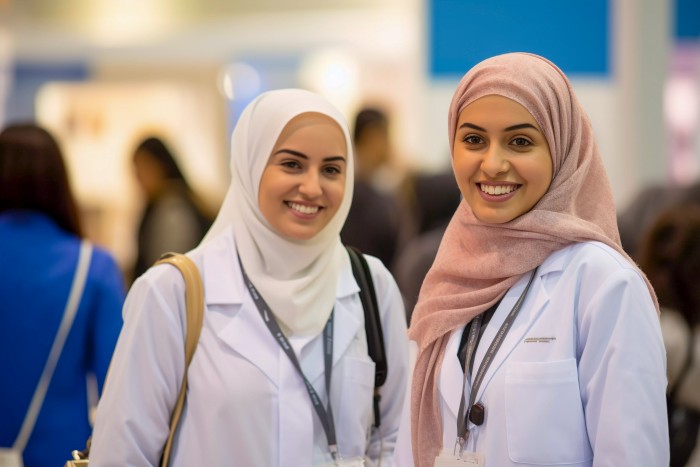
May 12 is an important day for the medical profession. Nurses are there during the moments people remember for the rest of their lives (good or bad) and yet their role often fades into the background.
Talk to anyone who has spent time in a hospital, and you’ll hear the same thing: it’s the nurses they remember. Not just for what they did medically, but for how they made them feel in situations that were often stressful or uncertain. This is why honoring them is so important! Some of the most important things on this day are:
- The purpose: highlighting the essential role nurses play in healthcare systems, especially as they frequently serve as the main, and at times sole, available health professional for numerous individuals.
- Their importance: it serves as a prompt to promote enhanced working environments, greater leadership positions, and better educational prospects for the nursing field.
- A day of celebration: it is recognized by the International Council of Nurses (ICN) through learning materials and by organizations globally to express appreciation and encouragement.
- Focusing on issues: conversations frequently emphasize the necessity to tackle worldwide nursing shortages and the effects of burnout.
It emphasizes the importance of equipping nurses with the resources, safety, and authority needed to enhance their effectiveness is very important. This article will explain to you the importance of honoring their service this year!
When Is International Nurses Day and Why It Matters
Officially, it’s observed every May 12th. The date comes from Florence Nightingale’s birthday, which is why her name always comes up in this context. The International Council of Nurses made it official back in the 1970s, and since then it’s been recognized worldwide.
If the day is reduced to a few thank-you messages or posts online, it doesn’t really change anything. Most nurses aren’t looking for that kind of recognition alone. What actually matters is whether their day-to-day reality improves.
Things like staffing, workload, and mental health support are the real issues. Without addressing those, the meaning of the day stays pretty surface-level.
The Critical Role of Nurses in Healthcare
You don’t have to spend long in a healthcare setting to notice how central nurses are. They’re the ones constantly moving, checking, adjusting, responding. It’s not always obvious work, but it’s continuous.
A lot of what they do happens in between the “big moments.” Monitoring a patient, catching a small change early, making sure nothing slips through the cracks. That kind of consistency is what keeps things running.
Then there are the high-pressure situations. Emergency rooms, intensive care units, and other places where things can change quickly. In those moments, there isn’t time for perfect planning. It’s about reacting, adapting, and staying focused.
The World Health Organization has pointed out that better nursing support leads to better outcomes. It sounds simple, but it says a lot about how important their role is.
Also, their work isn’t limited to hospitals. Nurses are involved in community programs, education, and prevention. You’ll find them working in spaces that don’t always get labeled as “healthcare,” even though they clearly are.
Emotional Support and Patient Advocacy
This is probably the part people underestimate the most. When someone is dealing with a health issue, they’re not just thinking about treatment: they’re dealing with uncertainty, fear, and a lot of questions.
Nurses often end up being the ones who step into that space. They explain things in a way that makes sense, they notice when something feels off emotionally, and sometimes they just listen. That matters more than people think.
Advocacy is another layer. Patients don’t always feel comfortable speaking up, especially in unfamiliar environments. Nurses often act as that middle point, making sure concerns don’t get ignored.
Cultural awareness plays into this too. For Muslim patients, something as simple as acknowledging prayer times or dietary needs can change the entire experience. These details might seem minor from the outside, but they’re not.
Challenges Facing Nurses Today
There’s no way around it: the job is demanding. Long hours are normal, but being short-staffed isn’t unusual either. In addition, the emotional side of the work doesn’t just disappear when a shift ends.
Burnout is something that comes up a lot now, but it’s been part of the conversation for a long time within healthcare. It’s just getting more attention recently. Then there’s the constant need to keep up. Healthcare changes fast, and nurses are expected to stay updated. That’s important, but it also adds pressure.
When all of this builds up, it starts to affect more than just the individual. It impacts the entire system.
The Importance of Recognition and Appreciation
Recognition is one of those things that sounds simple until you look at it more closely. Appreciation matters. But it has to go beyond one day.
A post, an event, or a message can be heartfelt. But what really makes a difference is how nurses are treated the rest of the time. Do they have manageable workloads? Are they supported when things get difficult? Are their concerns taken seriously?
Community awareness still plays a role, though. The more people understand what nursing actually involves, the more respect the profession tends to receive. That can influence future generations as well.
A Muslim Perspective on Care and Service
In Islam, taking care of someone who is sick isn’t just encouraged; it’s valued in a very real way. That aligns naturally with what nursing is about.
For Muslim nurses, this can add a deeper layer of meaning to their work. It’s not only a profession, but it’s also connected to their beliefs and values.
That doesn’t mean it’s always easy to balance everything. Things like prayer or fasting during Ramadan can require some flexibility in the workplace. When that flexibility exists, it helps. When it doesn’t, it can make an already demanding job harder.
Organizations like the Islamic Medical Association of North America (IMANA) exist partly to support professionals navigating that balance. We try our best to provide everyone with the necessary resources to make the healthcare sector more manageable for those who provide care.
Volunteering and Community Impact
A lot of nurses don’t stop at their official roles. They get involved in community efforts too. While they sometimes do it informally, some events are organized through initiatives.
In North America, there are plenty of programs focused on reaching people who don’t have easy access to healthcare. Some of these are led by Muslim communities, offering services like screenings or health education.
It’s not just about providing care in those settings; it’s also about building trust and helping people understand their health better. That kind of work doesn’t always get attention, but it has a real impact.
Supporting Nurses Through Education and Resources
If healthcare systems want to function properly, supporting nurses has to be part of the plan. That includes training and education, but also mental health support and workplace conditions.
At IMANA, our webinar by Dr. Farha Abbasi talks about the stigmas of mental health, which can be easily applied to the healthcare sector. The need to provide care to others is important, but leaving aside your own needs can be harmful for your mind and body.
It’s not realistic to expect people to keep giving at a high level without proper support. For Muslim nurses, having access to resources that understand their background can make that support more effective.
There’s also the question of how the profession is viewed. Nursing is more diverse than people sometimes assume, and highlighting that can help bring more people into the field.
Conclusion
At its core, International Nurses Day is about recognition, but not just in a symbolic way. It’s about understanding what nurses actually do and what they deal with on a daily basis.
Their role goes beyond medical care. It includes emotional support, communication, and advocacy, things that aren’t always easy to measure but are impossible to ignore.
This is also a moment to reflect on values that go beyond healthcare: caring for others, supporting communities, and showing up when it matters. At IMANA, we have the resources for those who want to volunteer or help.